Durable, custom epoxy coatings that hold up to Central Texas heat, clay soil movement, and daily wear.
Enter your info below and we'll follow up fast.
Epoxy is a resin that, combined with a hardener, cures into an extremely tough, chemical-resistant surface. It's why epoxy flooring has become the go-to upgrade for garages, rentals, retail spaces, and warehouses across San Marcos and Hays County — and why "epoxy garage floor cost" is one of the most-searched flooring questions in Central Texas.
Long, intense summers push surface temperatures well past what most coatings are built for, and the expansive clay soil common throughout San Marcos can shift concrete slabs over time, leading to hairline cracks if left unaddressed. A properly cured epoxy system resists heat, moisture, and everyday wear in garages, driveways, patios, and busy commercial spaces.
Basic systems start lower; commercial-grade, metallic, and flake finishes run higher. We give you a real number after inspecting your slab.
Garage floors, patios, basements, and interior living spaces. Holds up to vehicle traffic and daily wear far better than bare concrete.
With Texas State drawing heavy rental turnover, epoxy flooring in entries, kitchens, and living areas withstands move-in and move-out wear.
Retail, restaurants, offices, and warehouses rely on epoxy for durability and low maintenance under forklift traffic and chemical exposure.
Diamond-grinding removes existing coatings, oil stains, and contamination, opening the slab's pores for a proper bond.
We inspect for moisture and existing cracks, given San Marcos's clay soil and, for river-adjacent slabs, added moisture exposure. Cracks are repaired with structural-grade filler.
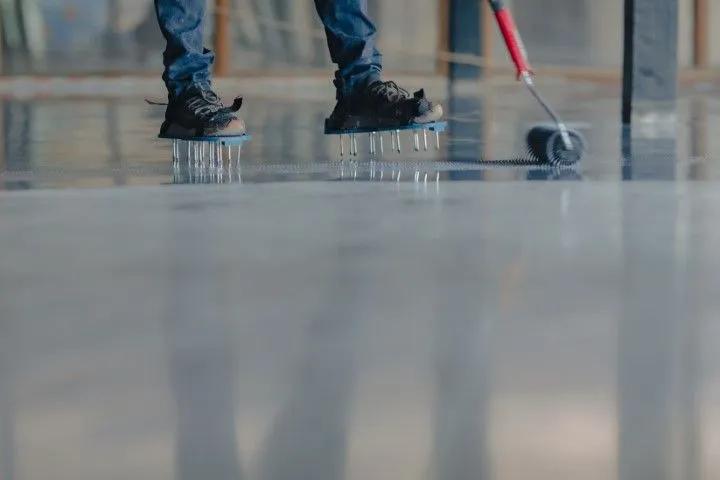
Epoxy is applied in carefully timed layers, adjusted for temperature and humidity so it cures properly even in summer heat.
A clear, UV-stable topcoat protects against yellowing, fading, and everyday wear for years to come.
If you've been researching flooring options, you've probably run into the terms polyaspartic and polyurea alongside epoxy. All three are resin-based coatings, but they cure and perform differently, and the right choice depends on your timeline, your slab, and how the space is used.
Epoxy has a thicker build, giving it excellent durability and the widest range of decorative options, including our metallic and flake finishes. It takes longer to cure than polyaspartic, which gives installers more working time to get metallic swirls and flake broadcasts just right, but it also means the floor typically needs a day or more before it's ready for foot traffic.
These coatings cure much faster, often ready for light use the same day, and they stay more flexible once cured, which can help in areas where San Marcos's clay soil causes slight slab movement. They're a popular choice for garages that need to be back in service quickly, though the decorative options are more limited than a full epoxy system.
We install and discuss both options during your free consultation, and we'll walk you through the real trade-offs for your specific slab and timeline rather than pushing one system across the board.
DIY epoxy kits are typically 1–2 mils thick; professional systems are 15–30 mils thick. Surface prep, mixing ratios, and cure timing all affect the final result — and 90% of coating failures trace back to poor prep. A failed DIY floor usually costs more to fix than a professional install from the start.
We understand surface conditions, mixing ratios, and San Marcos-specific challenges like heat and soil movement.
Right equipment, right manpower, from day one, without cutting corners.
If something isn't right, we stand behind it. A DIY job carries all the risk on you.
A properly installed system can last well over a decade with minimal maintenance. Longevity depends heavily on surface prep and installation quality, which is why we don't cut corners on either.
Sometimes, but we typically grind off failing or incompatible coatings first to ensure a proper bond. We'll assess your existing floor during the consultation.
There is an odor during application and curing, similar to fresh paint. We recommend good ventilation and staying out of the space for the first day or so.
A smooth solid-color finish can be slicker than a textured one. We offer slip-resistant additives and textured topcoats for garages, patios, and other moisture-prone areas.
We stand behind our installations and will discuss specific warranty coverage for your project during your free consultation.
Yes, we'll go over specific warranty coverage for your project and provide documentation as part of your quote.
It can affect cure times, which is why we adjust our application process based on current temperature and humidity rather than using a one-size-fits-all timeline.
Regular sweeping keeps grit from scratching the topcoat over time.
A damp mop with mild soap and water is usually enough; avoid harsh or abrasive chemicals.
Epoxy resists most stains, but cleaning up oil or chemical spills promptly helps keep the finish looking its best.
From a clean solid-color coating to a decorative metallic epoxy or flake epoxy finish, we'll walk you through the options during your free consultation.
Get a Free Estimate